July 27, 2026 · Common Empire
The Complete Guide to Cycling Gatineau Park
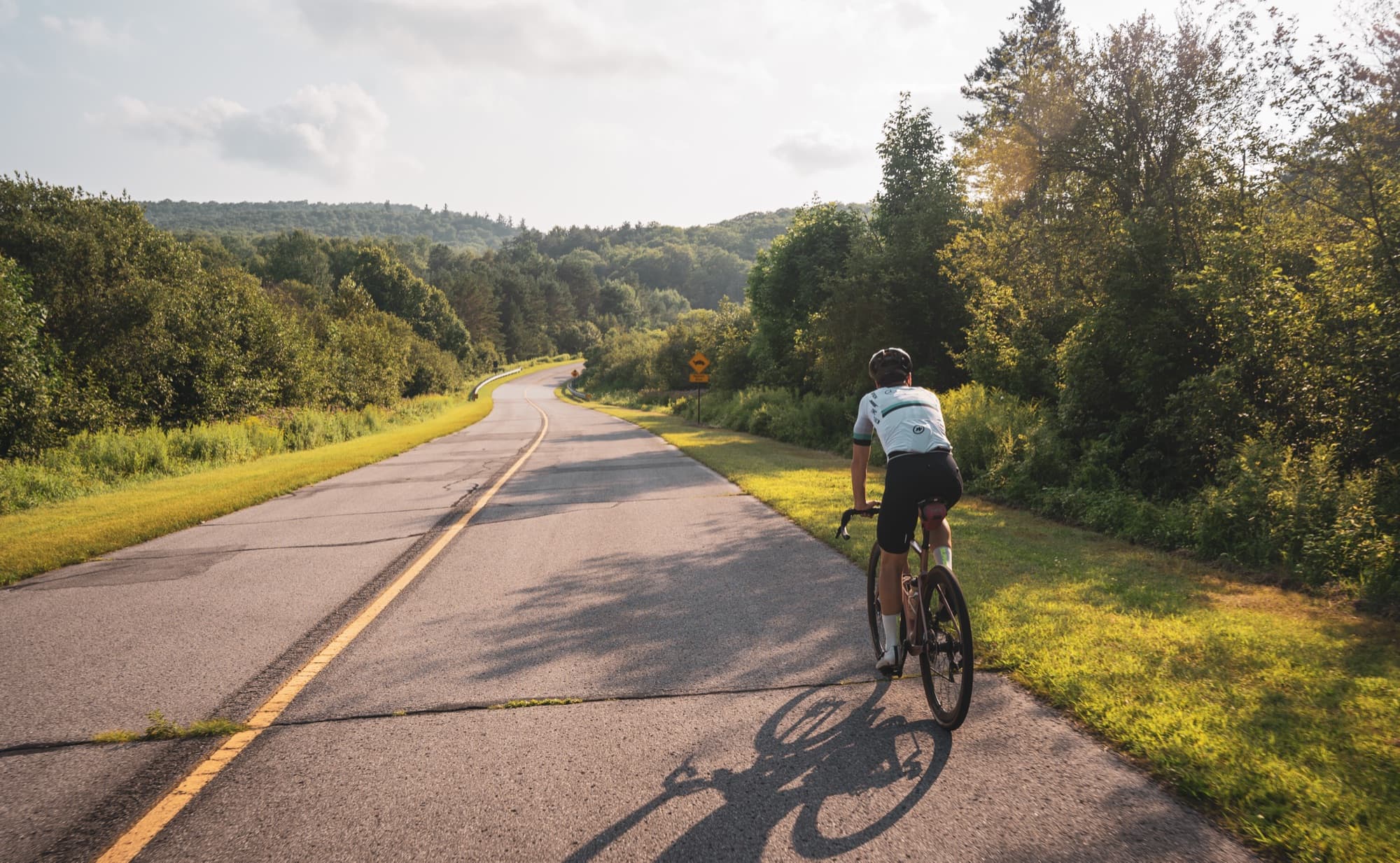
Ask any rider in the Ottawa–Gatineau region to name their favourite place to ride, and Gatineau Park will come up before you finish the question. Just minutes from downtown, its ribbon of smooth, rolling parkways winds through hardwood forest, past glassy lakes, and up to lookouts with views clear across the Ottawa Valley. It is the region's crown jewel — a place where a nervous beginner and a seasoned racer can share the same road and both come home grinning. This is your complete guide to riding it well.
Why Gatineau Park is special
The park offers about 32.5 kilometres of scenic parkways designed for slow, human-powered travel. The surface is generally excellent, the scenery changes with every bend, and the terrain is genuinely rolling — enough climbing to feel like an accomplishment, with descents and flatter stretches to catch your breath. In autumn, the sugar maples turn the whole park gold and crimson, and the parkways fill with cyclists soaking up one of the best fall-colour rides in the country.
Car-free mornings: the region's best-kept secret
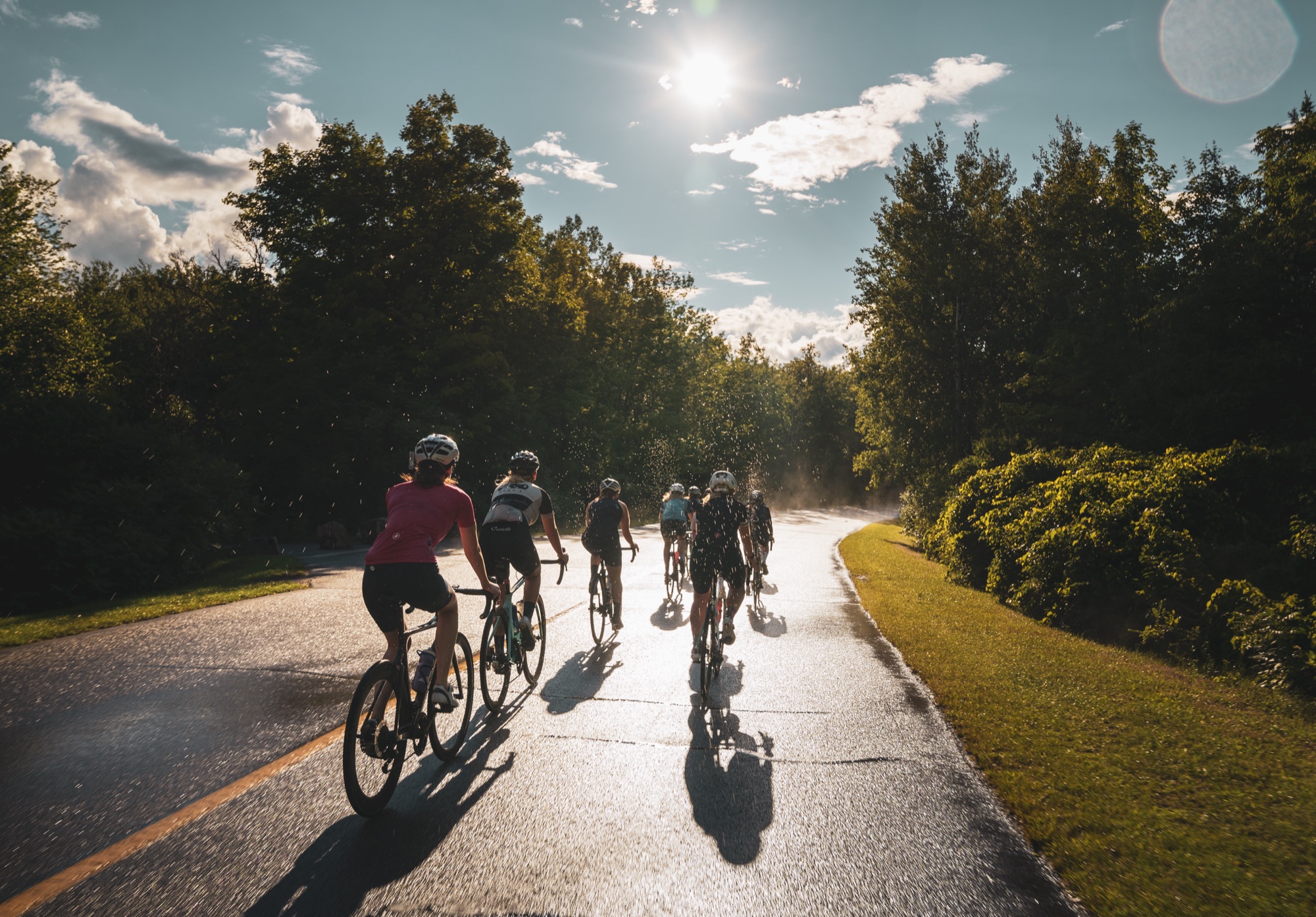
Here is the detail that turns a good ride into a magical one. For much of the summer, the park's parkways are reserved for cyclists, walkers, and skaters — no motor vehicles at all. In recent years this has run on Sunday mornings, roughly 6 to 11 a.m., from mid-May through the end of August. Rolling up a mountain climb with the whole road to yourself, birdsong instead of engines, is an experience every rider in the region should have at least once.
Exact dates and hours shift a little from year to year, so check the National Capital Commission's current-season parkway schedule before you go.
Tip: the Ottawa side of the river has its own car-free program — the NCC's Weekend Bikedays close several riverside parkways to traffic — so there is almost always somewhere peaceful to ride on a summer weekend.
Sharing the road when the parkways are open to cars
Outside those car-free windows, the parkways are ordinary shared roads — and for most of the season you will be riding alongside motor vehicles. That is completely normal here, but it asks a little more of you. Ride like you want drivers to give you room next time.
When the parkways are car-free vs. open to traffic
The car-free program shifts a little from year to year, but a typical summer season follows this pattern:
| When | The parkways are… |
|---|---|
| Sunday mornings, ~6–11 a.m. (mid-May to end of August) | Car-free — cyclists, walkers and skaters only |
| NCC Weekend Bikedays (seasonal, during posted hours) | Car-free on the designated parkways |
| All other daylight hours, spring to late autumn | Open to motor vehicles — shared road |
| Winter and posted closures | Closed to cycling |
This is the general pattern, not a guarantee for any given weekend — always confirm the current-season dates and hours on the NCC's Bikedays and parkway schedule before you head out.
How to share the road well
- Look back before you move. A quick shoulder-check (or a glance in your mirror) before you pull out around a walker, a parked car or a pothole keeps everyone safe. Signal, then move.
- Stay single file when traffic is present. Two abreast is fine on an empty road, but form a single line so vehicles can pass you safely on the narrow, winding parkways — then regroup once it clears.
- Be predictable and be respectful. Hold your line, signal your turns, and don't swing wide on the climbs. A wave to a driver who gave you space goes a long way — we are all guests in the park.
- Control your descent speed. The downhills are fast and some corners tighten unexpectedly; leave yourself room to react, especially early in the season when there may be grit on the road.
- Yield on the pathway. If you dip onto the park's paved multi-use path, remember it is shared with pedestrians and cyclists yield — a friendly call as you pass goes a long way.
Follow Quebec's Highway Safety Code, ride the way you would want to be passed, and the park stays welcoming for everyone who shares it.
Where to start: P3 and the parkways
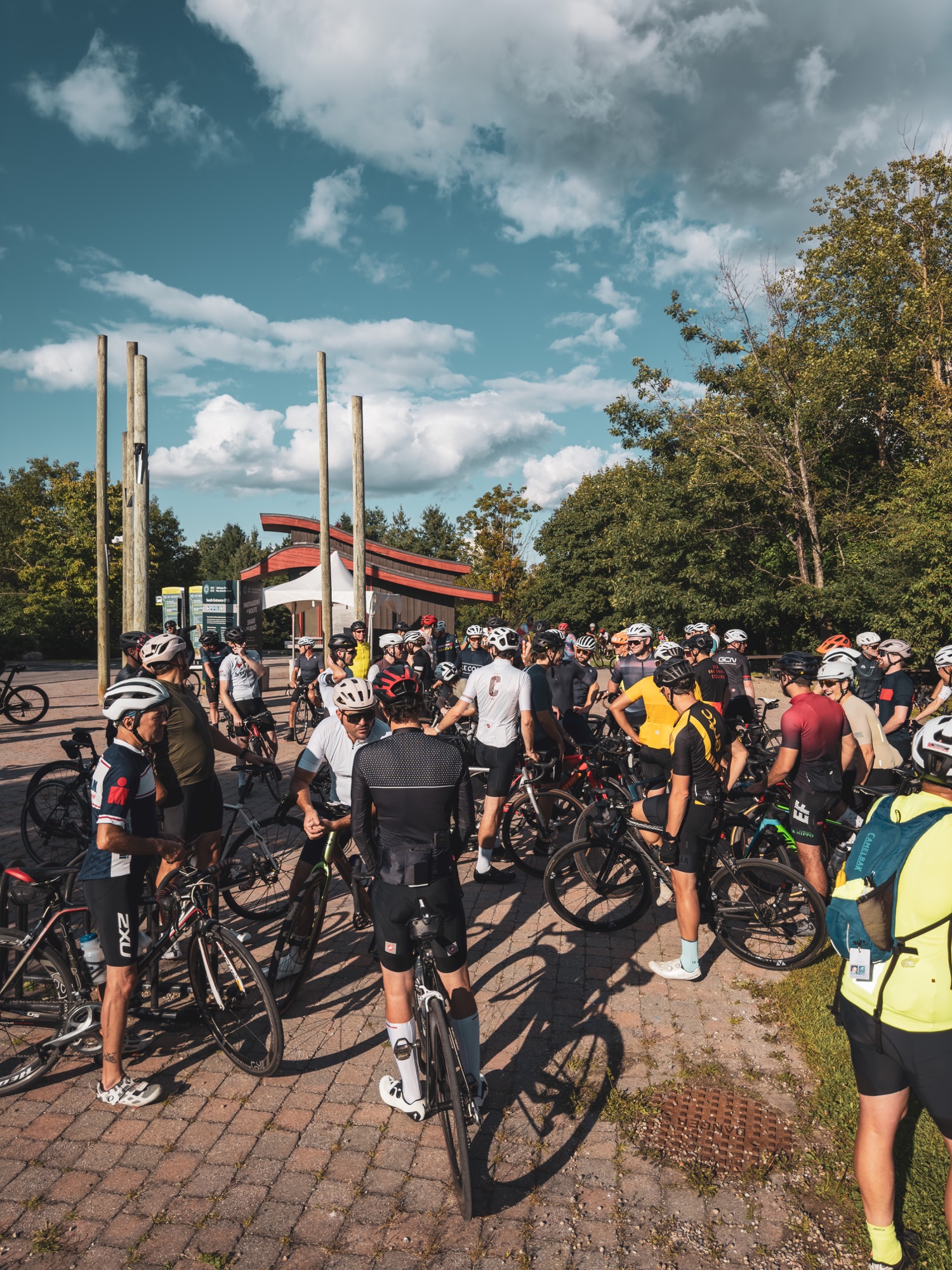
Most riders begin at the P3 lot at the park's south gate, the closest access point to the city. It has water fountains and washrooms, making it an easy meeting spot and a place to top up bottles before you climb. From there, three connected parkways form the network riders use:
- Gatineau Parkway — the wide, main artery.
- Champlain Parkway — the more direct line toward the big lookout.
- Fortune Parkway — links the other two into loops.
You can string these together into anything from a gentle out-and-back to a lung-busting circuit.
The climbs: Pink Lake, King Mountain, and Champlain Lookout
Gatineau Park is defined by its climbs, and the beauty is that each one rewards you with something worth stopping for.
Pink Lake
Rises past one of the park's most photographed spots — a strikingly green, meromictic lake with an interpretive centre explaining its unusual ecology. It is a manageable climb and a lovely place to pause.
King Mountain
A twisting, curvy ascent that keeps things interesting and is a favourite for riders working on their climbing rhythm.
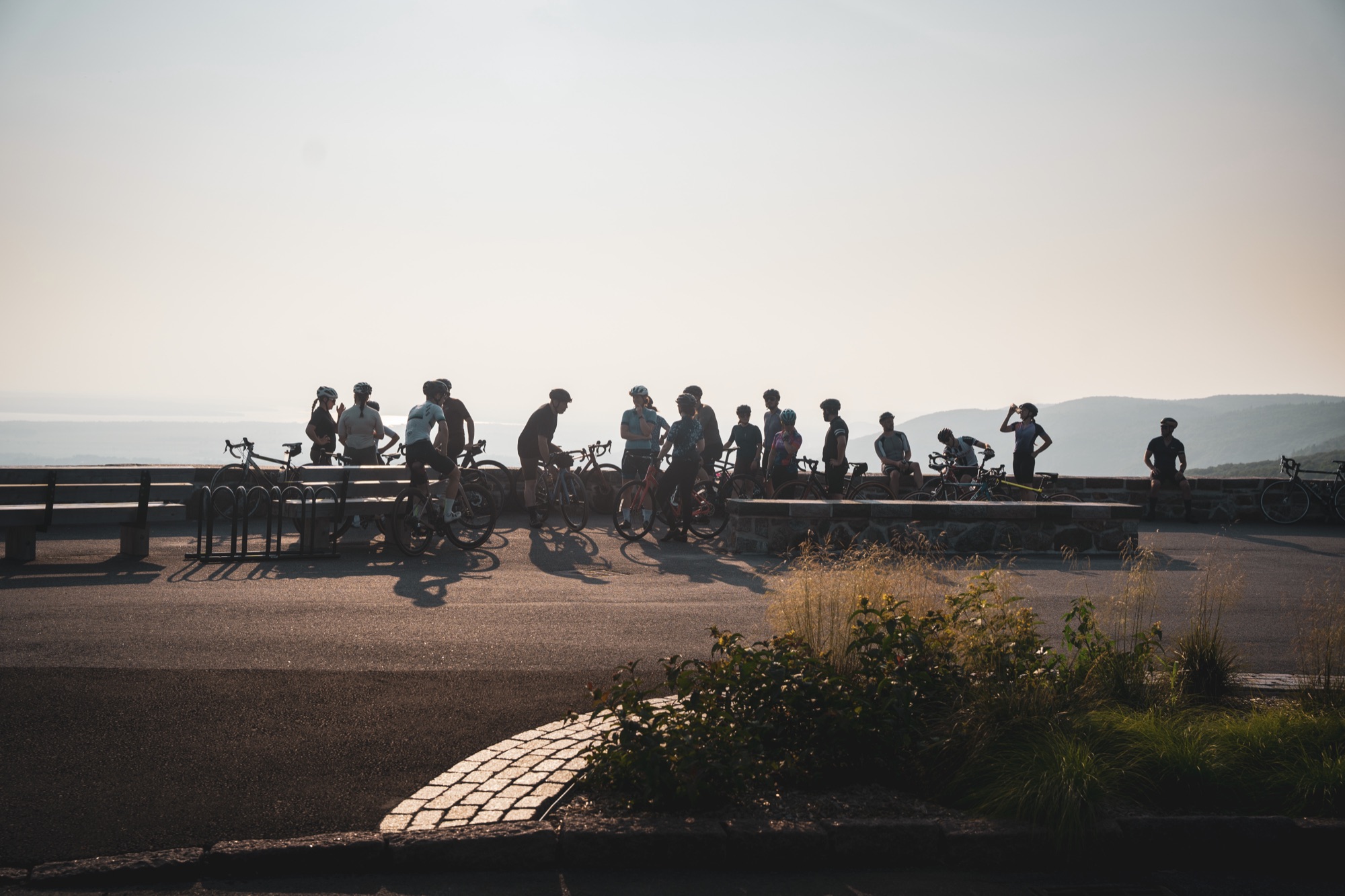
Champlain Lookout
Loops for every level
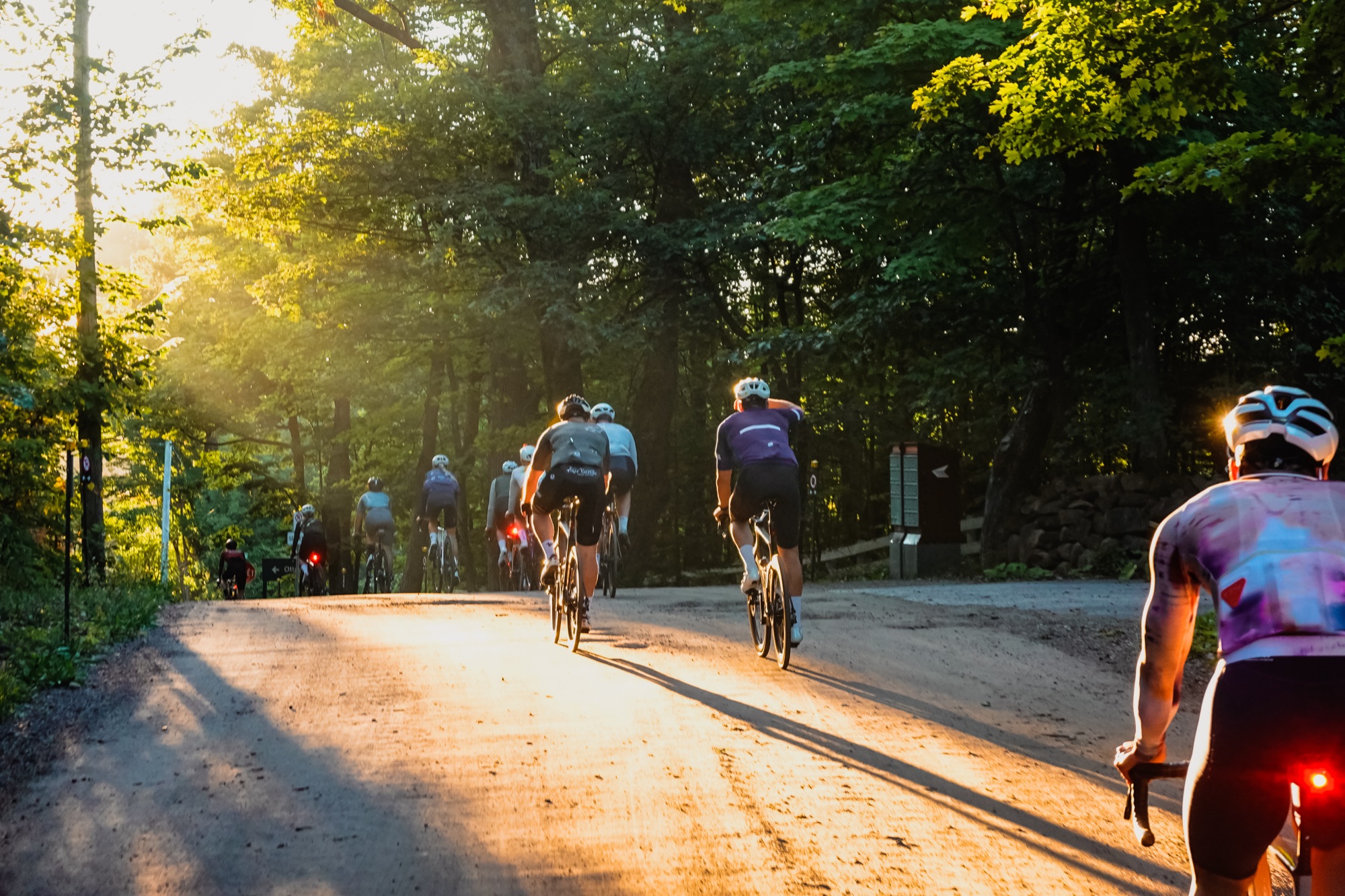
New to riding? Start with a shorter out-and-back from P3 along the Gatineau Parkway. Turn around whenever you like — every metre you climb, you get to enjoy on the way back down. There is no rule that says you have to reach the Lookout on day one.
Ready for the classic? The full Gatineau Park loop is around 42 kilometres with roughly 700 metres of climbing — a proper ride with a real sense of achievement, and exactly the route our weekly Park Loops ride follows. It is challenging but achievable for a rider who has built up some fitness, and it is far more fun in company.
Chasing fitness? Stronger riders link the Fortune, Champlain, and Gatineau parkways into a repeatable training circuit and ride it two or three times over, treating the climbs as intervals. It is one of the best natural training grounds anywhere near a Canadian city. Browse our route library to plan your version.
Before you go: dial in your setup
Before any big climbing day, check your tyre pressure. Too high and you will get bounced around on the fast descents; too low and you risk pinch flats on the rougher sections. Getting it right makes the whole ride safer and more comfortable.
Dial in your setup first. Use our free Tyre Pressure Calculator to find your ideal front and rear pressure for the day — then come ride the park with us. New to riding in a bunch? How We Ride covers spacing, hand signals, and the calls we use to look after each other. Our Park Loops group meets weekly, and like all our rides it is no-drop: nobody gets left behind.
When to go
The parkways are typically open to cycling from spring through late autumn. Summer weekend mornings are the prize for the car-free experience; weekday evenings are quieter and cooler. And if you can only ride the park once this year, make it late September or early October, when the fall colours are at their peak and the climb to Champlain Lookout becomes something you will remember all winter.
Gatineau Park has a way of turning casual riders into cyclists and cyclists into regulars. Whether you are riding your first hill or your five-hundredth, it is better shared — so grab a friend, check the schedule, and we will see you on the parkway.
Find a ride with us → · Plan your route → · Dial in your tyre pressure →