July 29, 2026 · Common Empire
Group Riding 101: Etiquette, Hand Signals, and How to Ride in a Paceline
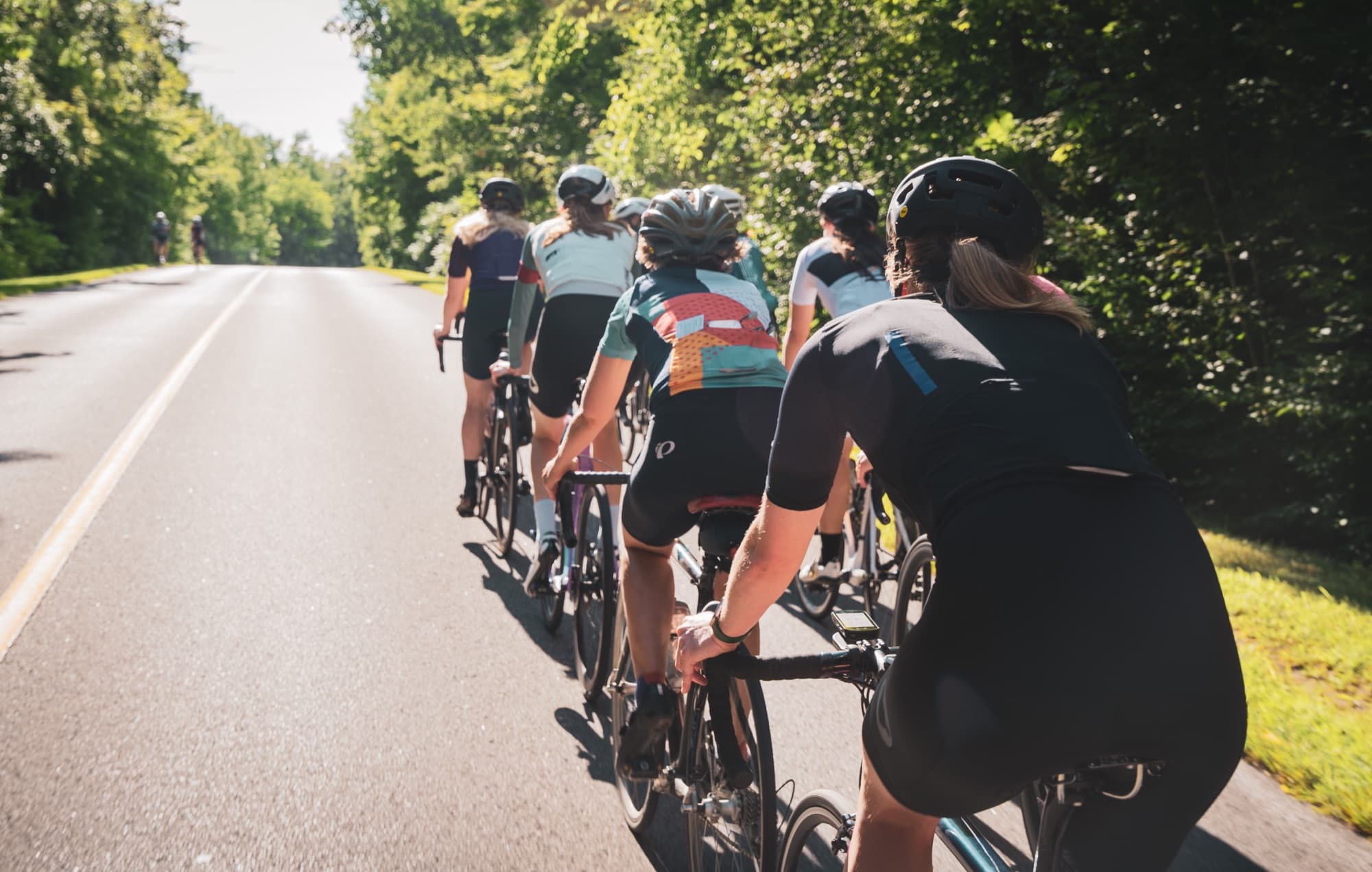
There is a particular kind of magic in riding well with a group. The pace feels easier, the kilometres tick by in conversation, and a headwind that would grind you down solo becomes almost pleasant when you are sharing the work. But if you have never done it, rolling up to your first group ride can feel intimidating — everyone else seems to know an invisible set of rules. Here is the good news: those rules are simple, they exist to keep everyone safe, and once you know them you will wonder why you waited so long.
This is your primer on riding smoothly, safely, and courteously in a bunch — whether it is a relaxed café spin or a spirited weekend ride. (For the short version we hand every new rider, see How We Ride.)
Why ride in a group?
Beyond the company, there is real physics at play. A rider sitting in the draft of others can save 20 to 30 percent of their energy compared with riding alone. That is why a group can cover more ground, more comfortably, than any of its members could solo. Riding together also makes you a better, more confident cyclist — you learn to hold a line, ride smoothly, and trust the wheels around you.
The unwritten rules (that everyone should know)
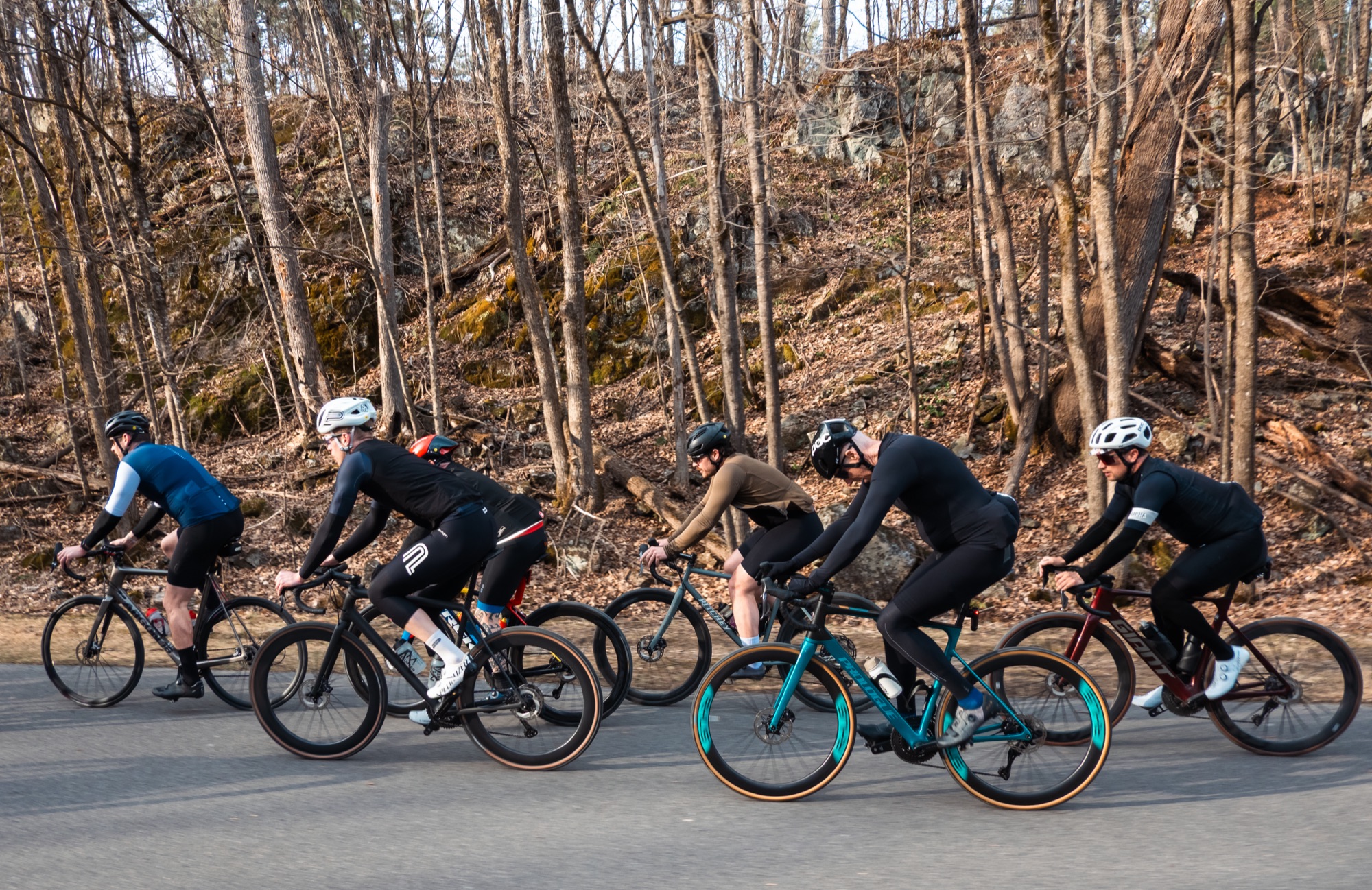
Group riding runs on predictability. The single most important thing you can do is ride smoothly and do nothing sudden. Every rider behind you is trusting that you will not brake hard, swerve, or stand up abruptly without warning.
- Hold your line. Ride straight and steady; don't drift across the road or into the rider beside you.
- Never overlap wheels. Keep your front wheel behind the rear wheel of the rider ahead — an overlap plus one small swerve is the most common cause of group crashes.
- Brake gently and gradually. Feather your speed with a soft touch rather than grabbing a handful.
- Don't half-wheel. When riding two abreast, keep your handlebars level with your partner's rather than always nudging half a wheel ahead — it quietly ramps up the pace and frays tempers.
- Point out and call hazards. You are the eyes for the riders behind who cannot see the pothole, the parked car, or the gravel patch.
Hand signals and verbal calls
Because riders behind you often cannot see the road ahead, the group communicates constantly. You do not need to memorise a huge vocabulary — these few cover almost everything:
- Pointing down at the road: a pothole, rock, or hazard on that side — move over or lift off it.
- A hand flicked behind your back or a wave: move over, there is an obstacle or parked car ahead.
- Hand held out to the side: turning that direction.
- "Car back!" / "Car up!": a vehicle is approaching from behind or ahead — a heads-up to hold your line and single up if needed.
- "Slowing" or "Stopping": called clearly so the concertina behind you doesn't pile up.
When you are new, it is perfectly fine to simply echo the calls and copy the signals you see from riders in front. That is how everyone learns.
Riding in a paceline
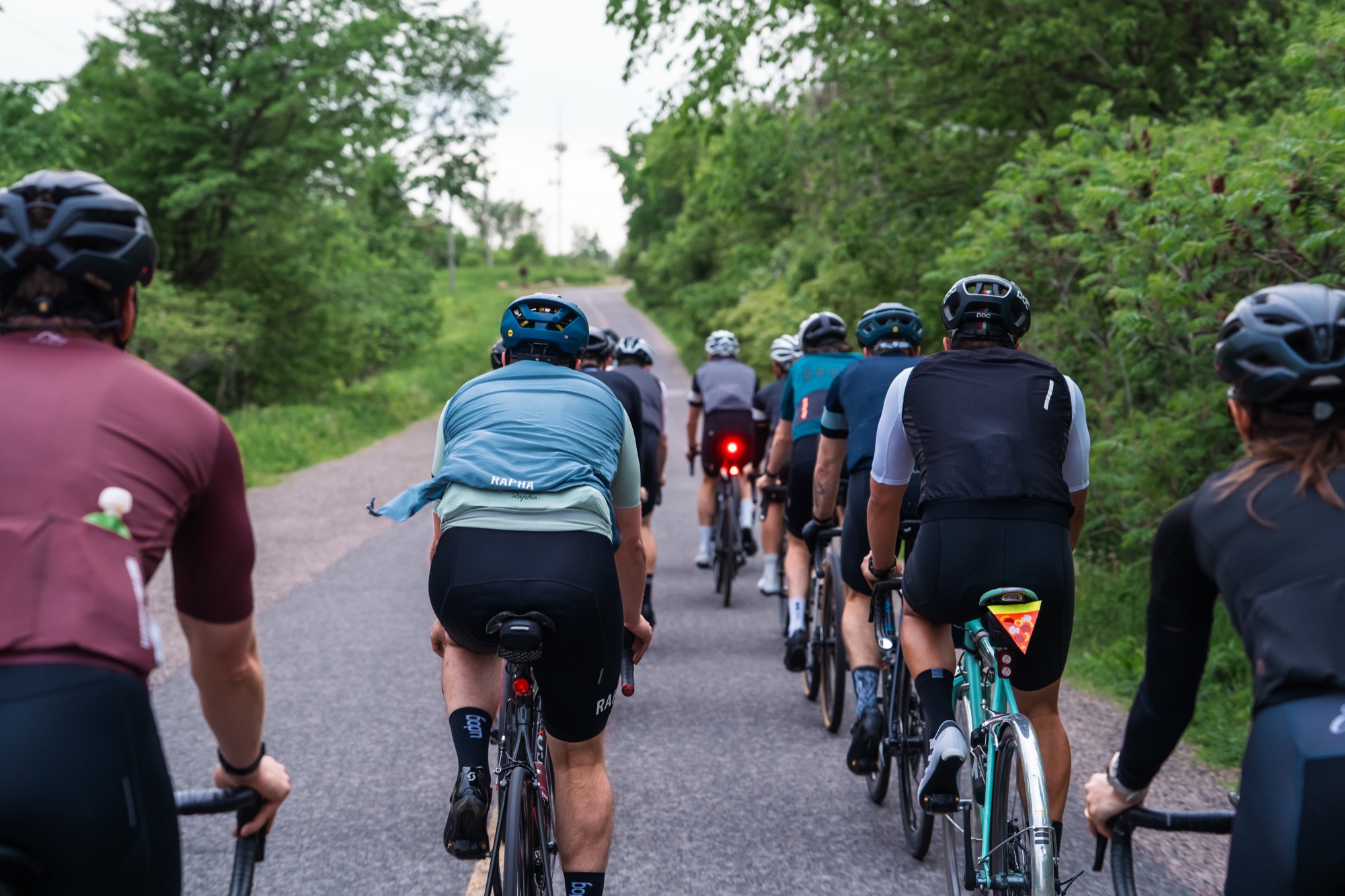
A paceline is a group riding in a line, taking turns at the front where the wind resistance is highest. The rider on the front does the hard work for a spell, then peels off, drifts to the back, and tucks into the draft to recover while the next rider leads. Done well, it is a beautifully efficient, almost hypnotic rhythm.
Two tips make it click. First, when it is your turn to pull off the front, keep the pace steady — don't accelerate as you take the lead; just maintain the speed and let the previous leader slot in behind. Second, when your turn is done, keep your effort smooth as you drift back so the group stays together. Short, frequent turns keep everyone fresher than long, heroic pulls.
Climbing and descending together
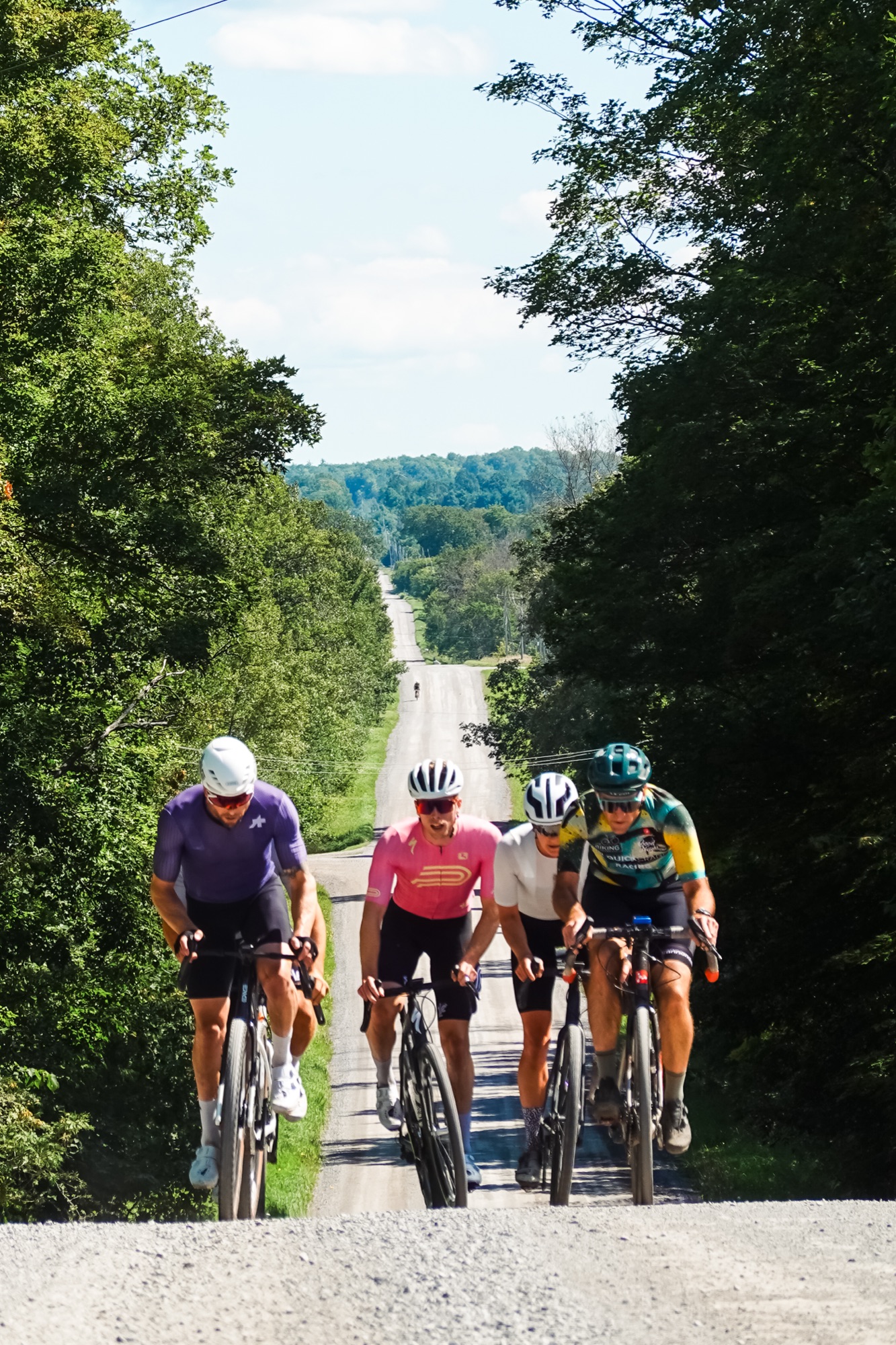
Groups naturally stretch on climbs — that is fine. The etiquette is to regroup at the top so no one is left behind. On descents, give each other a little more room, avoid overlapping wheels at speed, and don't brake in front of someone unexpectedly. If the group is riding two abreast and the road narrows or a car approaches, singling into a line smoothly is the safe, courteous move.
Showing up to your first group ride
Here is the most important thing we can tell you: you belong there. At Common Empire, our rides are no-drop — nobody gets left behind, full stop. Come with a working bike, check your tyre pressure, bring a spare tube and a snack, and arrive a few minutes early to say hello. Our Don't Attack the Coffee Ride is a relaxed, social no-drop ride built for exactly this, and Rise & Ride is a friendly café roll to ease into. You will pick up the rhythm within a kilometre or two.
Ready to try it? Check our Rides page and join a no-drop group ride this week. Whatever your pace, we ride together — because connection over competition is the whole point.
Group riding is a skill like any other, and it gets more enjoyable every time you do it. Learn the rhythm, look after the riders around you, and you will unlock one of the very best parts of this sport.