July 28, 2026 · Common Empire
How to Fuel a Ride: What to Eat and Drink on the Bike (Without Overthinking It)
Almost every rider has a bonk story. You feel great for two hours, then somewhere on the way home the road tilts up, your legs turn to concrete, and the last ten kilometres feel like fifty. It is one of the most miserable feelings in cycling — and it is almost entirely preventable. The good news is that fueling is the most fixable mistake in the sport. You do not need a sports-science degree or a cupboard full of gels. You need a simple plan and the discipline to start early.
Here is everything you actually need to know to eat and drink well on the bike, whether you are heading out for a relaxed gravel spin around Lanark County or a big day in Gatineau Park.
Why fueling matters more than you think
Your body stores carbohydrate as glycogen in your muscles and liver, and that store is surprisingly small — enough for roughly 90 minutes to two hours of steady riding before it starts running low. When it runs out, your body is forced to slow down dramatically. That is the bonk. Fat is a near-limitless fuel, but you can only burn it fast enough to ride hard if there is still carbohydrate in the system to keep the engine turning over.
So the goal of on-bike fueling is simple: keep topping up the carbohydrate you are burning before the tank runs dry. The riders who finish strong are almost never the ones with the most talent on the day — they are the ones who ate and drank on schedule while everyone else waited until they felt hungry. On the bike, hungry is already too late.
The one number that matters most: carbs per hour
Forget calories for a moment. The number that decides how your ride feels is grams of carbohydrate per hour. Here is a reliable rule of thumb:
- Under about 75 minutes: you generally do not need to eat at all — water is enough. Ride, enjoy it, refuel afterward.
- One to two and a half hours: aim for 30 to 60 grams of carbohydrate per hour.
- Longer than two and a half hours, or shorter but hard: aim for 60 to 90 grams per hour. Well-practised riders can push toward 120, but that takes a trained gut — build up to it gradually.
For a sense of scale, a typical energy gel has about 22 to 25 grams of carbohydrate, an energy bar around 40, and a banana roughly 25. So a rider targeting 60 grams an hour on a long ride might have a gel and a few bites of a bar, or a bottle of drink mix plus a banana, every hour. Bigger riders and harder efforts sit at the top of these ranges. And you do not have to use engineered products — real food works beautifully: dates, rice cakes, a jam sandwich, and dried fruit are all proven ride fuel.
Don't forget to drink: hydration and electrolytes
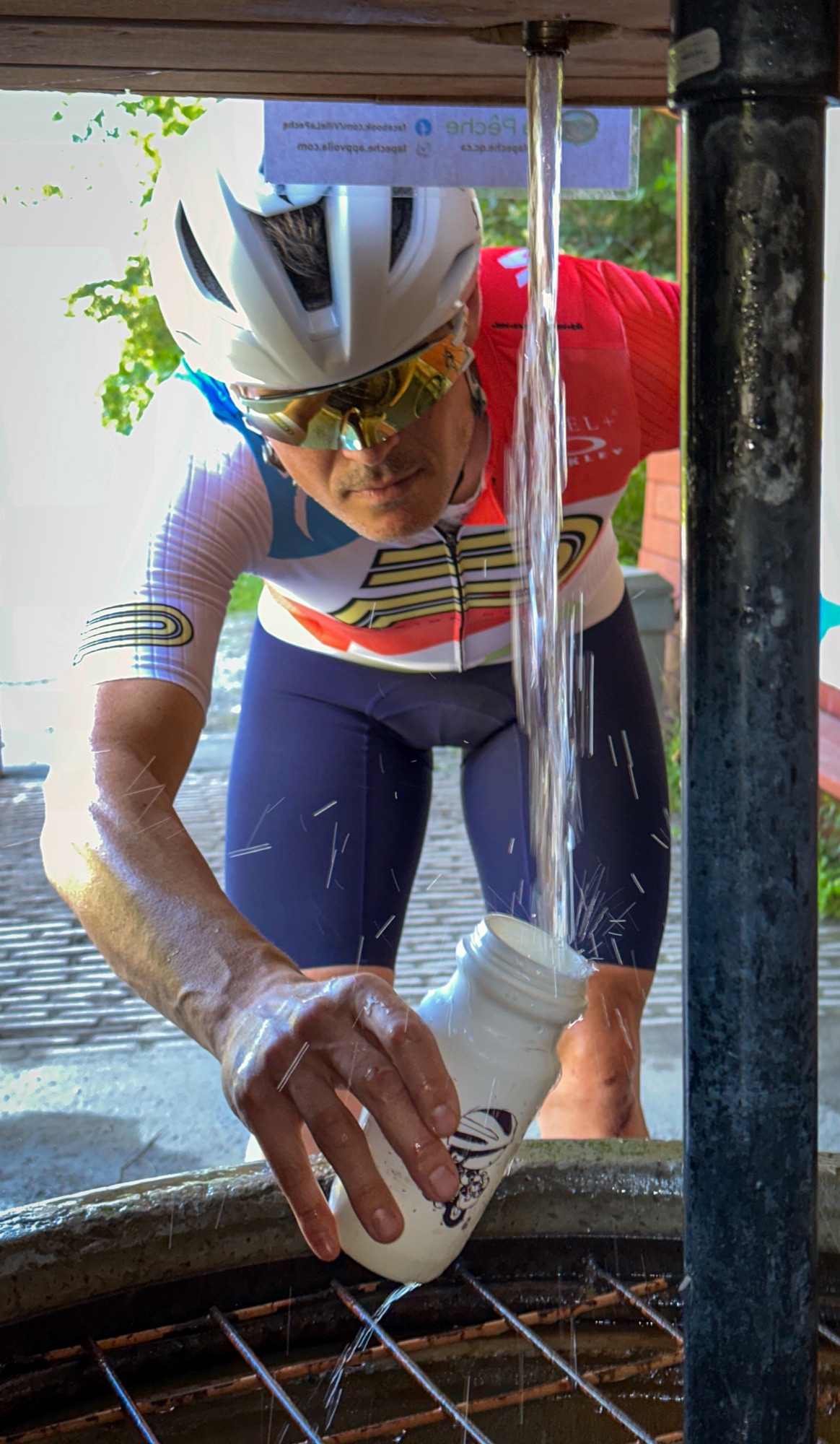
Fueling is only half the job. Even mild dehydration — a fluid loss of about two percent of your body weight — measurably raises your heart rate and drops your power at the same effort. On a warm day that can happen well before you feel thirsty.
A practical starting range is 500 to 1,000 millilitres of fluid per hour, leaning to the low end on a cool day and the high end when it is hot and you are working hard. Because you lose salt as well as water when you sweat, add sodium on rides longer than about an hour or in the heat — roughly 500 to 700 milligrams of sodium per hour from an electrolyte mix or tablets. Riders who finish a ride with white salt streaks on their kit are "salty sweaters" and should sit at the higher end.
Know your own numbers: weigh yourself before and after a one-hour ride without drinking; each kilogram lost is roughly a litre of sweat. That single test tells you your personal hourly fluid target better than any generic chart.
Before, during, and after
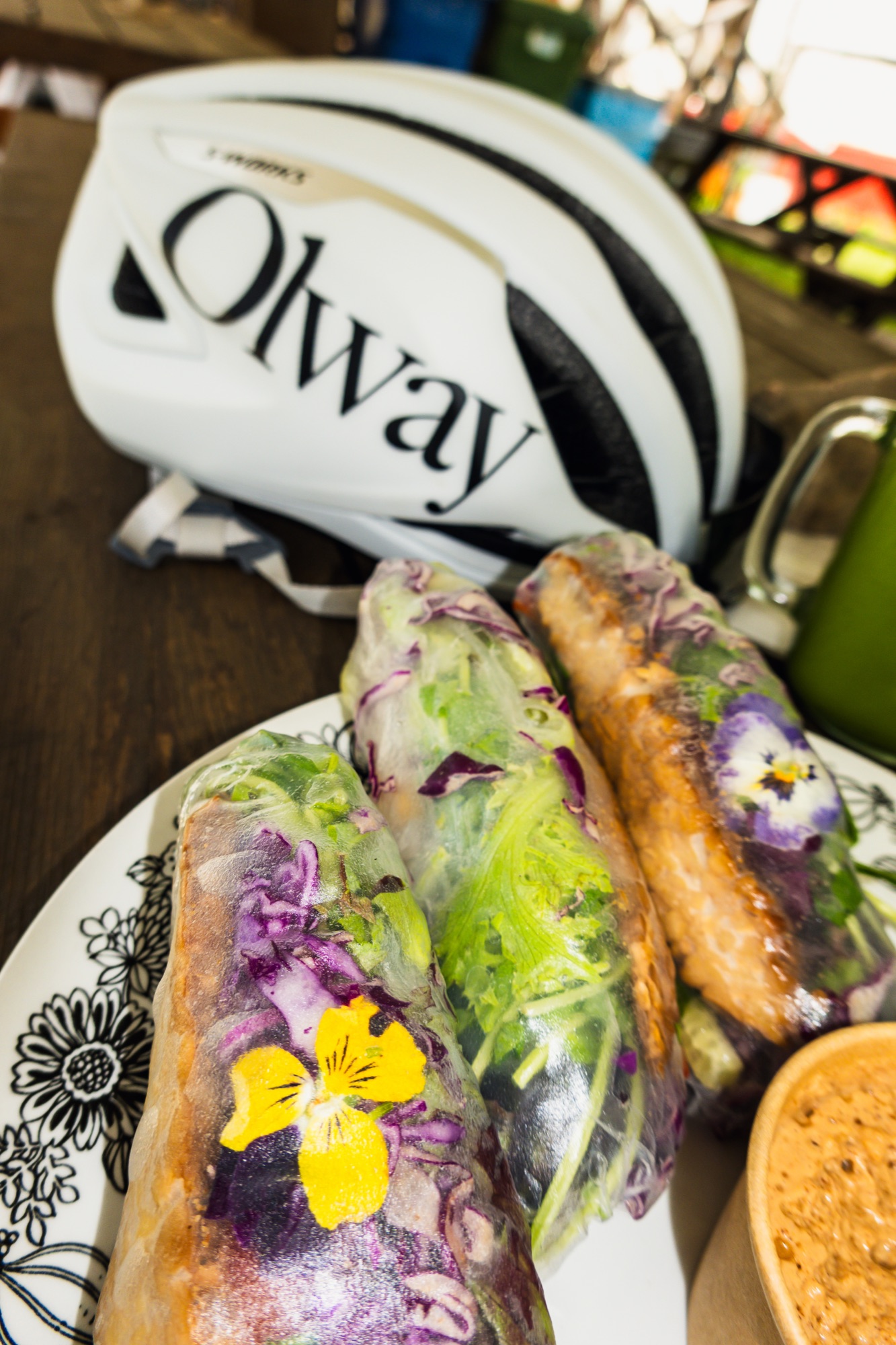
Before: For an easy or short ride, no special preparation is needed. For anything long or hard, eat a carbohydrate-rich meal two to three hours beforehand — oatmeal, toast and honey, rice, a bagel — and top up with a small snack in the last hour. Start the ride hydrated, not scrambling to catch up.
During: Start fueling early — within the first 30 to 45 minutes — and keep to a schedule rather than waiting for hunger. Setting a small repeating timer on your bike computer or watch is the single most effective habit you can build. Eat before the big climb, not on it.
After: The 30 to 60 minutes after a hard or long ride are prime recovery time. A mix of carbohydrate and protein — chocolate milk is a classic for a reason — helps you refill glycogen and repair muscle so tomorrow's ride feels good too.
What this looks like on a real ride
A 90-minute gravel spin, moderate effort: One bottle of water with a pinch of electrolyte, and one gel or a small handful of dried fruit about an hour in. Simple.
A four-hour road ride with real climbing: Aim for roughly 70 grams of carbohydrate and 600 to 800 millilitres of fluid every hour — say a bottle of carb-and-electrolyte mix plus a gel or bar each hour, adjusted for the heat. Over four hours that is around 280 grams of carbohydrate: pack it before you leave so you are never guessing.
Common mistakes to avoid
- Starting too late. By the time you feel empty, you are already behind and may not recover mid-ride.
- Drinking only water on long or hot rides. Without sodium you can dilute your system and still cramp.
- Trying new products on event day. Test your fueling on training rides first — your gut needs practice too.
- Overcomplicating it. You do not need six products. One drink mix, one solid food, and a schedule will carry you a very long way.
Take the guesswork out of it
Our free Fueling Calculator turns your weight, ride length, intensity, and the temperature into exact carb, fluid, and sodium targets — plus how much to pack. Punch in your next ride before you head out.
Fueling well is not about being fancy. It is about respecting the distance and looking after yourself so you can enjoy the whole ride — and still have the legs for the last climb home. Dial it in, and you will be amazed how much better cycling feels. After all, adventure is better when you finish it strong.